

Imbolc, or Candlemas, represents the dark womb of the year. We light a candle in this long night, knowing the days are getting longer and the promise of spring lies somewhere past the horizon. This is a time to remember hope in the darkest, coldest, harshest of times—and this hope is precisely why we have so many prognosticatory traditions associated with early February: the groundhog seeing his shadow, or Candlemas being fair and bright, meaning winter will take another flight.
Coming together for the festival of Winter Lights is a communal acknowledgement that this, too, shall pass. We are indeed in dark times. We may feel that we live in occupied territory. As our ancestors cared for one another in times of privation, our coming together is key to our survival and sanity. In this moment of darkness, we turn to an ancient truth: that brotherhood—sacred, mystical, and defiant—has always been a light in the darkness for those who love outside the boundaries prescribed by the powerful.
The Language of Brotherhood
In modern occultism, the word “frater”—brother—is common currency. But as historian John Boswell noted, this word could carry historic sexual connotations that have been carefully scrubbed from our collective memory. The bonds between men who loved men were not always relegated to the shadows. They were, at times, celebrated, sanctified, and understood as pathways to the divine.
Consider the Sacred Band of Thebes, that legendary army of lovers formed in 378 BCE—150 pairs of male lovers who became the most formidable warriors of the ancient world. They were united not just by military discipline, but by sacred vows exchanged at the shrine of Iolaus, the lover of Heracles. The rationale was simple yet profound: lovers would fight more fiercely for each other than strangers ever could. They would rather die than show cowardice before their beloved.
For forty years, the Sacred Band remained undefeated. When they finally fell at the Battle of Chaeronea in 338 BCE, annihilated by the forces of Philip II and his son Alexander, they died as they had lived—arms linked together, lovers to the end. Philip himself wept when he saw the three hundred lying dead together. Even in death, they testified to a truth the world has repeatedly tried to forget: that love between men is sacred, holy, and a potent source of transcendent power.
Saints and Soldiers
This tradition did not end with the decline of ancient Greece. It threaded its way through early Christianity in both hidden and visible forms. Saints Sergius and Bacchus, fourth-century Roman soldiers and Christian martyrs, were bound together by a love so profound that the oldest accounts of their martyrdom describe them as erastai—lovers. When their Christian faith was discovered, they were paraded through the streets in women’s clothing, an attempt to humiliate them that instead became a testimony to their courage. Early accounts say they responded by chanting that they were dressed as the brides of Christ, rejoicing in being clothed in the garment of salvation.
Bacchus died under torture, but appeared to Sergius in a radiant vision, telling him they were “bound together” forever and would be united again—“your crown of justice is me, my crown of justice is you.” Crowning was part of the marriage ceremonies of the time and remains an integral part of the marriage rites of Eastern Orthodox churches. Scholars, such as Boswell, believe Sergius and Bacchus may have been united in the rite of adelphopoiesis, or “brother-making,” a form of early Christian same-sex union. Their names were invoked in these rites for centuries, and churches dedicated to them sprang up across the Byzantine Empire and beyond.
These paired lover saints were not aberrations. They were examples of a pattern woven through history—men bound together by love and faith, finding in each other both earthly devotion and a path to the sacred.
The Order of Chaeronea
In 1897, in the midst of Victorian England’s brutal criminalization of homosexuality, poet and activist George Cecil Ives founded a secret society intent on keeping this flame alive. He called it the Order of Chaeronea, naming it after the battlefield where the Sacred Band fell. The Order’s purpose was more than political or social, though it fought for what Ives called “the Cause”—the end of the oppression of homosexuals. It was also spiritual, mystical, and at its heart fraternal.
The Order had elaborate rituals, initiations, passwords, and a seal bearing the mysterious word AMRRHAO and “the seal of the double wreath.” New members took sacred vows: “That you will never vex or persecute lovers. That all real love shall be to you as sanctuary. That all heart-love, legal and illegal, wise and unwise, happy and disastrous, shall yet be consecrate for that love’s Holy Presence dwelt there.”
The Order’s manifesto declared: “We believe in the glory of passion. We believe in the inspiration of emotion. We believe in the holiness of love.”
Oscar Wilde was recruited to the Order. So was Lord Alfred Douglas. At its peak, the Order may have had two or three hundred members—men (and a few women) who understood that in a world hostile to their existence, they needed sacred space, mystical brotherhood, and the strength that comes from knowing you are not alone.
From Darkness to Light: A Uniting Rite
This lineage—from the Sacred Band to Sergius and Bacchus to the Order of Chaeronea—brings us to our present moment. A new expression of this ancient tradition is coalescing with a mission to explore, develop, and preserve these queer male mysteries.
The United Rite represents a “requeering” of mystical and occult traditions—not a rejection of what came before, but a recognition that witchcraft, magic, and mystery traditions were always more than a little queer: liminal, transgressive, rebellious, defiant. As Sven Davisson writes in Breeding Devils in Chaos: The United Rite, there is no conflict between the Queer and the Craft. The conflict was manufactured by those who sought to police the boundaries of the sacred.
The United Rite stands in a long tradition of queer practitioners who have understood that social dislocation—the experience of being pushed to the margins, the fringe—opens us to wisdom the center cannot see. Magic, as many queer practitioners describe it, is about “opening” and “receptivity,” about attuning to normatively hidden patterns, about learning to see what an unlivable world has trained us not to see.
In this time of darkness—when we may feel we live in occupied territory, when the forces of reaction seem ascendant—we must cultivate a coming together, a rite of uniting that offers what the Sacred Band offered, what Sergius and Bacchus offered, what the Order of Chaeronea offered: sacred brotherhood, mystical community, and the knowledge that we have survived dark times before.
The Candle in the Dark
We light candles at Imbolc because we know that even in the darkest part of the year, the light is returning. We light candles because our ancestors did, because they survived winters we can barely imagine, because they took care of each other when no one else would.
The Rite is a candle lit in the dark. It is a recognition that queer mystical brotherhood is not a modern invention but an ancient tradition, one that has been suppressed, hidden, and denied, but never fully extinguished. It is the understanding that when we come together—as lovers, as brothers, as seekers of the sacred—we access a power that the world has always feared and always tried to destroy.
But we are still here. The Sacred Band fell at Chaeronea, but their memory inspired the Order that bore that battlefield’s name. Sergius and Bacchus were martyred, but their love was celebrated in churches across the Christian world for a thousand years. The Order of Chaeronea operated in secret, but it planted seeds that would grow into later liberation movements.
And now, the onus is on us to carry this torch forward, exploring what it means to be queer and mystical in the 21st century, to claim our place in lineages of power and devotion that stretch back millennia.
This too shall pass—the darkness, the occupation, the winter. But we will survive it together, as our ancestors did, by lighting candles in the dark, by taking care of each other, by breaking bread at the communal feast, by remembering that our love is holy, our bonds are sacred, and our coming together is itself an act of magic.
The groundhog may see his shadow. This year, Candlemas may be fair and bright. Today’s full moon is certainly arriving in a cold, clear night here in New Orleans. But we know the truth: spring is coming, the light is returning, and we will be here to greet it—together, as we have always been, arms linked like the Sacred Band, crowned with each other’s love like Sergius and Bacchus, bound by sacred vows like the brothers of Chaeronea.
We believe in the glorious potential of our passion. We believe in the inspiration of our emotions. We believe in the holiness of love—brother united with brother; bard to bard.
And in believing, we survive.
Learn more about joining our Rite.
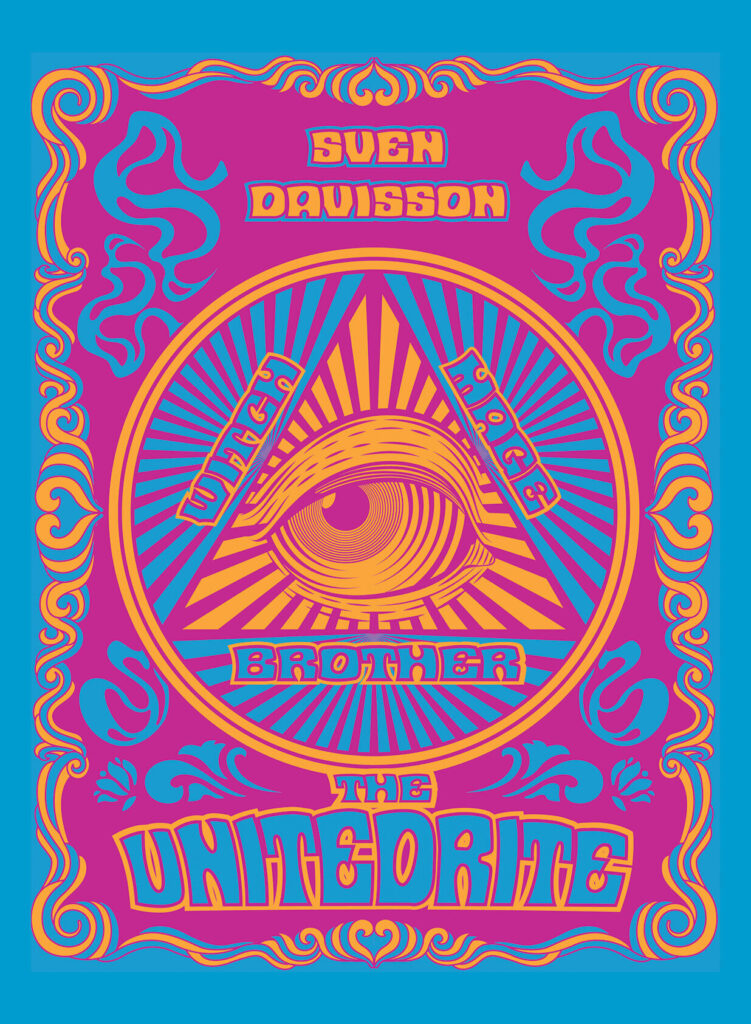
We are often asked about the basic philosophical underpinning of the United Rite. We point to various tidbits hidden in plain sight–a book chapter here, a section there, a blog post, or an email.
Here, now, is an extended elevator speech, if you will, pulling together the basic philosophical pillars supporting our work.
The United Rite offers men on the crooked path a framework for understanding the transformative power found in brotherhood, practice, and the charged space when brothers choose to walk together.