
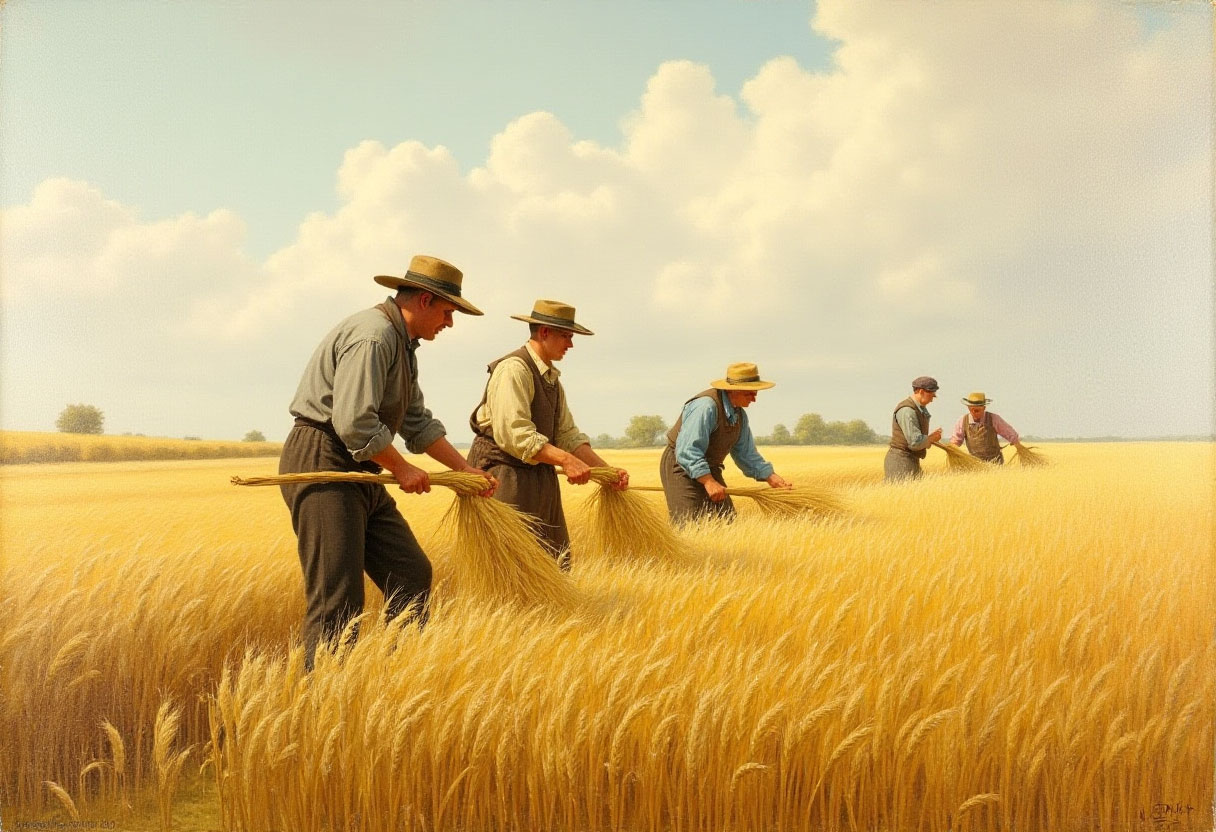
John Barleycorn was a hero bold,
Robbie Burns
Of noble enterprise;
For if you do but taste his blood,
‘Twill make your courage rise.
When I think about the history of the harvest, the old English folk song “John Barleycorn” always comes to mind. The song tells the tale of John Barleycorn, a character who personifies the barley crop, following his journey from planting to harvest—and ultimately, his transformation into beer and whisky. It’s a story that has been sung for centuries, appearing in everything from traditional harvest festivals to 20th-century folk revivals.
John Barleycorn is more than just a fictional figure in a tune. His tale is deeply connected to the harvest season itself and reflects the cyclical nature of the year—planting, reaping, and renewal. In fact, the song’s popularity is a testament to the importance of these harvest rituals and their underlying folklore in people’s daily lives, especially in rural communities that relied heavily on the success of their crops.
John Barleycorn’s tale is both simple and profound. The character—sometimes a cheerful old man, sometimes a noble knight—is a personification of the barley crop and, by extension, all cereal grains so critical to human survival. The story goes that each year, John Barleycorn is sown with hope into the cold earth. As the months pass, he grows tall and strong, only to meet his end at harvest. Yet, with every seeming death—crushed, milled, brewed into ale or whisky—John Barleycorn is reborn, his spirit living on in the drinks that warm our gatherings and soften the edges of winter.
This myth traces its roots through centuries-old ballads and customs. In communities throughout the British Isles, the cutting of the last sheaf was often accompanied by songs to John Barleycorn. That sheaf might be braided into a corn dolly, placed in a place of honor, or even thrown onto a rooftop, ensuring next year’s fertile fields. These echoes of the old religion—tied to the turning of the year, the death and resurrection motif, and the close link between land and life—remind us just how central John Barleycorn was to rural celebration and survival.
What makes the story of John Barleycorn especially compelling is how it spotlights his sacrifice during the harvest. In the song, John isn’t just cut down—he endures hardships, is ground and crushed, all to ultimately provide for the community. This transformation isn’t just tragic—it’s necessary. Through his ‘death’ and the process of being brewed or distilled, John Barleycorn is reborn as ale and whisky, nourishing those who depended on the harvest. His journey embodies the idea that from loss comes renewal, turning the act of reaping grain into a powerful symbol of gratitude and community sustenance.
Today, as we celebrate the harvest with local festivals, our own customs, autumn beers, and pumpkin-spiced everything, John Barleycorn’s legacy endures. His saga is a reminder that we, too, are part of an eternal cycle—of endings and beginnings, dark days and light, sorrow and joy. So raise a glass this season (be it cider, ale, or a mug of spiced tea) and toast the spirit of John Barleycorn, whose ancient story turns on, like the wheel of the year itself.