
The Unbroken Thread of the Mother and Her Divine Son
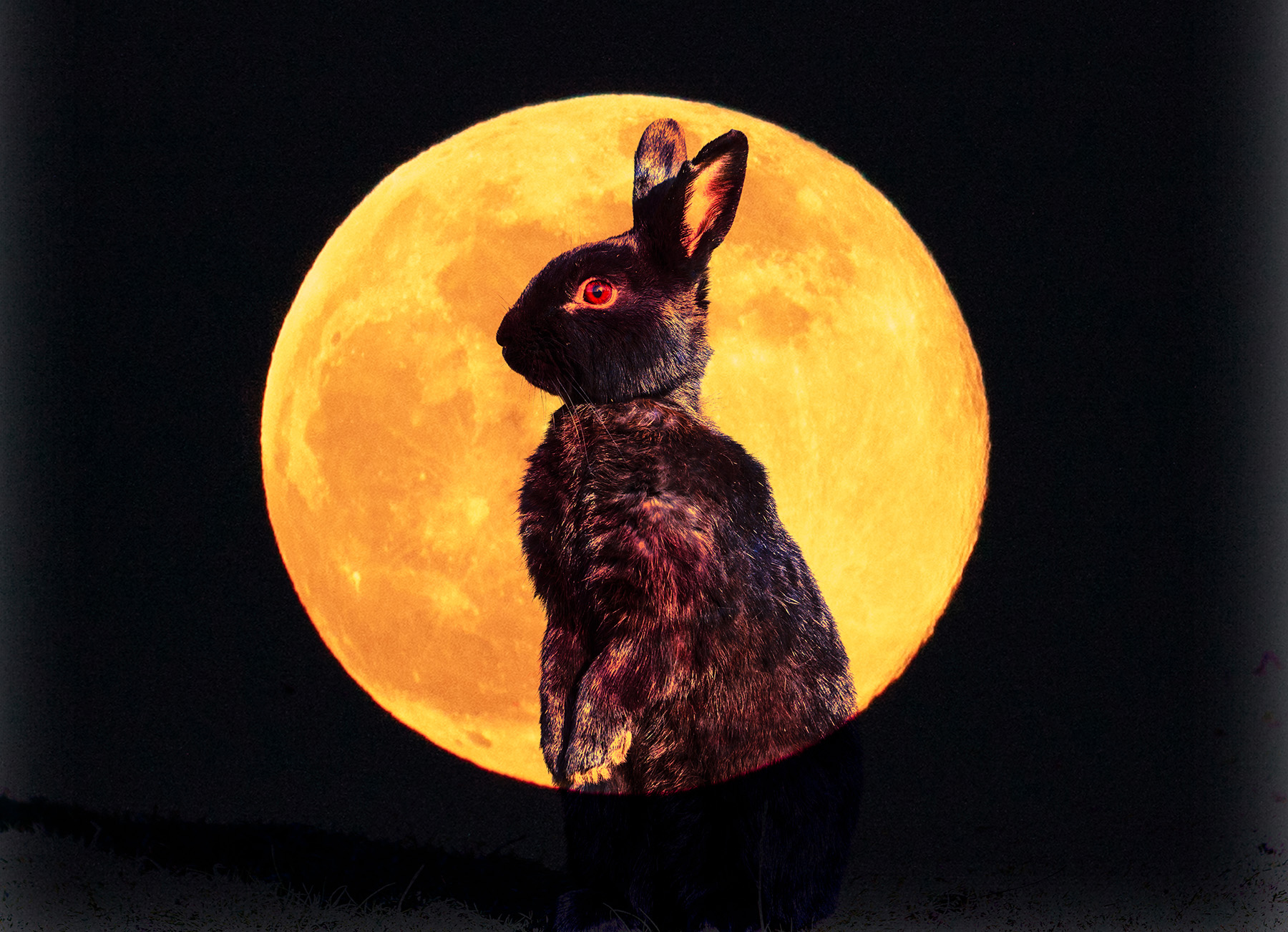
The hare moves through our lore like a shadow at twilight—liminal, uncanny, and forever dancing at the edge. She is the archetypal witch’s familiar, a shapeshifter in the moonlight who stares back at us with eyes that hold ancient wisdom. In the British Isles and across Northern Europe, the hare has long been woven into the fabric of folk belief, associated with fertility, transformation, and the mysteries of dusk and shadowy moonlight. Now, as the full moon rises in what our elders called the Hare Moon, we find ourselves once again moved to consider what endures, what transforms, and how the old ways are still with us and have been through the generations.
This is not about seeking out pagan roots in others’ practice or longing for an idyllic time before the incursion of Christianity into the lands of our ancestors. This is not a desire to turn back the clock. It is also not an attempt to recreate what has been lost based on the fragments ancient others left behind. We honor continuity with the past, while folkways are a living, evolving tradition. As echoed in the earliest rock carvings, time is a spiral. The moon moves on in its rhythmic cycling. We are not seeking grand, mythic origins. Witchcraft is a living, organic tradition. Modern practice upholds a continuity with the past.
We reflect the latest incarnation of a living tradition—breathing, adapting, growing with each generation that takes up its threads. We pay homage to the past without becoming trapped within it like an insect preserved in amber, frozen in a moment that can never breathe again. Instead, we are the continuation of something that has always moved, always transformed, always found new expression while maintaining its essential nature. The stream flows on, carrying the same waters in ever-changing forms. As the old saying goes: “Never the same river twice.”
Consider how the cult of the Madonna—the veneration of Mary—was not a departure from the old ways, but a continuation—the ancient cult of the Mother wearing new robes, speaking in a new tongue, yet embodying the same eternal archetype. The Black Madonnas of Europe, the Queen of Heaven, the Star of the Sea—these titles and images echo back through millennia to Isis, to Inanna, to the Snake Goddess, to the Neolithic mother figures carved in stone. The prayers whispered in cathedrals carry the same yearning, the same reverence, the same recognition of the sacred feminine that once filled the groves and temples.
The cult of Mary and the iconic image of the mother with her child are continuations of the ancient archetypal thread of the Great Mother and her divine son, a motif that stretches back through countless mythologies and religious traditions. Throughout Christian times, from the medieval period forward, Mary embodies the nurturing, compassionate, and protective qualities long associated with the Great Mother, while Jesus, as her child, echoes the figure of the divine son found in earlier myths such as Isis and Horus or Demeter and Persephone. This enduring image speaks to the universal human experience of motherhood, birth, and the sacred bond between mother and child. It weaves together past and present spiritual narratives in a symbol that remains deeply resonant across cultures and eras.
Reclaiming this imagery is not theft but recognition—an acknowledgment of an unbroken thread that winds through history, sometimes hidden, sometimes transformed, but never severed. When we honor the Mother in her many forms, we are not inventing something new or resurrecting something dead. We are simply seeing clearly what has always been there: the continuous river of devotion that flows beneath the changing names and faces. The Madonna and the ancient Mother are not separate beings but different reflections of the same eternal presence, and in recognizing this, we claim our rightful inheritance as inheritors of a tradition that predates and transcends any single religious framework.
This is the power of a living tradition—it does not reject what came after, but recognizes the continuity within transformation. It sees the spiral, not the line. It knows that the Mother who blessed the grain in ancient fields is the same who watches over us still, whether we call her by old names or new.