
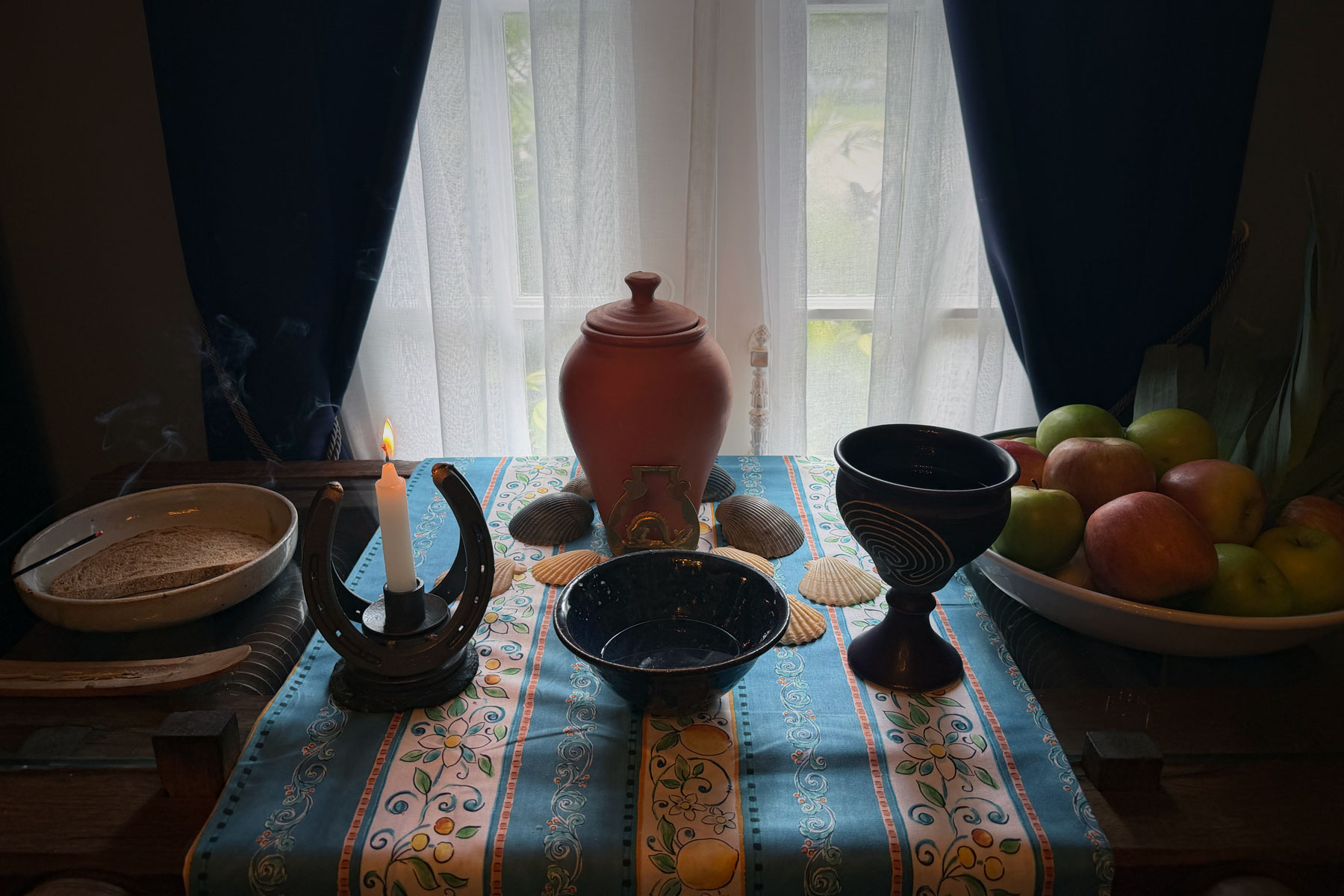
The Sea Mother
The sea has long been a place where the Goddess’s presence is strongly felt. Vast, ever-changing, and alive with power, the sea is at once nourishing and dangerous. Across traditions, goddesses of the sea are rulers of waves and storms and keepers of the hidden depths, the tides, and the creatures that move beneath the surface. They embody the sea’s double nature—giver of life, an ancient superhighway, and source of abundance, yet also a force that can swallow the unwary without warning. In her presence, the ocean is more than water; it is a sacred threshold between worlds.
Because the sea is always in motion, she is often linked with change, transformation, and passage. We are reminded that water embodies death and initiation when we cast the circle. She governs crossings, whether they are voyages across open water, the movement between life and death, or the inward crossings of grief, desire, and renewal. Sailors have long called on Her for protection, while coastal communities have honored Her with offerings of bread, salt, flowers, shells, or the day’s first catch. In this way, devotion to a Sea Mother is also a recognition that the sea itself is a living presence, worthy of respect and owed reciprocity.
At the same time, the Mother, in her watery aspect, often carries older meanings of fertility and abundance. The sea feeds, shelters, and connects; it carries trade, story, and sustenance from shore to shore. In myth, the sea goddesses are at times associated with pearl, fish, foam, mother-of-pearl, or the pale light on water, images that suggest both beauty and depth. To speak of a goddess of the sea is to speak of power that is ancient, sustaining, and never fully knowable—an embodiment of the waters that surround, sustain, and outlast us all.
The waters of lakes, seas, and oceans evaporate into the sky, then condense into clouds. Her waters then rain down upon the earth, replenishing the soil and allowing seeds to grow under the light of Mother Sol.
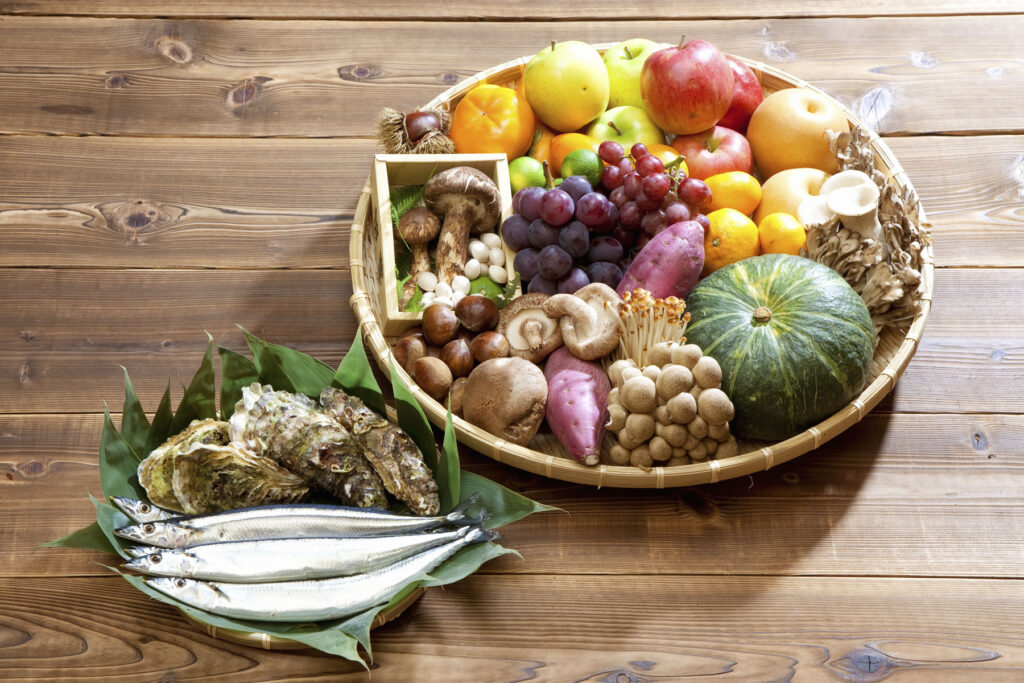
First Fruits
The turning at the beginning of August—midway between the summer solstice and the autumn equinox—marks the start of the harvest season in the Northern Hemisphere. Across the Celtic and British worlds, this festival bears many related names: Lughnasadh in Irish, Lùnastal in Scots Gaelic, Gwyl Awst in Welsh, and, in the Christian calendar, Lammas, from Old English hlaf‑mæsse, “loaf‑mass.” Whatever the name, the thread is the same: gratitude for the first fruits of the land and rituals to safeguard them from spoilage. Bread is traditionally baked from the earliest cut of grain, and in some places, the first loaf is broken into four and placed in the barn’s corners as a charm for blessing and protection. Folklore remembers this as a time of gathering, feasting, and games, when people came together to acknowledge both the generosity and the risk of the season and to honor the bright, skillful powers that preside over ripening and craft.
As the year nears harvest’s culmination, the sun begins her slow descent; the long arc of Midsummer is past, and a subtle melancholy enters the light. Offerings of bread, sweets, and ale are made to support the crops’ final swelling and ward off blight and decay. Fertility motifs from spring return in altered form: riders carry poles—sometimes forked or topped with a carved horse’s head—through the fields as living charms, while wells and springs are garlanded in honor of the land’s indwelling powers. Rowan crosses are placed in houses and barns for protection. Under these customs lies an older, sharper truth: harvest is also a season of cutting, so death imagery is never far away. In the ballad of John Barleycorn, the grain‑spirit is mocked, cut down, threshed, and finally transformed into ale and whisky. His symbolic death is the price of sustenance and celebration, a reminder that at Lughnasadh we stand in the tension between gratitude for what has grown and the necessary sacrifice that makes bread and beer—and life itself—possible.
Blessed Be!