
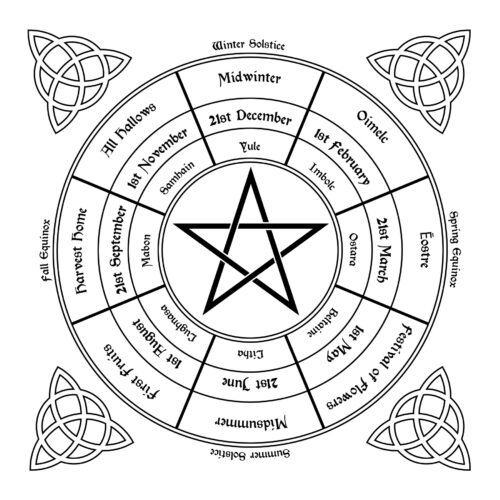
The Holy Tides
The Seasonal Cycle of the Year
Welcome to our exploration of the Holy Tides of the Old English pre-Christian religious calendar. This calendar is a fascinating glimpse into the spiritual life of early Anglo-Saxon communities, reflecting their deep connection to the cycles of nature, agriculture, and seasonal change. The Holy Tides, marked by various festivals and rituals, showcased their reverence for deities and spirits associated with the earth, sky, and the changing seasons. From the vibrant celebrations of winter solstice to the joyous rituals of spring fertility, each tide was woven into the fabric of daily life and communal unity.
Midwinter
Days around the Winter Solstice. Known commonly as Yule or Júl, this marks the midpoint of the winter months. It is a celebration and respite from the interstitial wintry months of shortening days begun at All Hallows. The celebration commences with Mother’s Night where the female divinities are honored and closes with the toasting of the apple trees at twelfth night. Read More >
Oimelc
February first or second. Stems from the Anglo-Saxon/Old English words for ‘ewes milk.’ Celebrated as the festival of lights, Candlemas, in the Christian faith. This festival serves as a reminder that though the days may still be cold, the days are lengthening and spring will come. For the colder climates, it is the light in winter that brings hope. Read More >
Eostre
The Vernal Equinox or first full moon following. Celebrates the goddess of spring and fertility. Spring is here! Read More >
Festival of Flowers
May first. Things are turning green and the first blossoms are showing. Animals are in their rut. Read More >
Midsummer
Summer Solstice (Liða or Litha). The land is green, flowers are in abundance, and Mother Sun is at her strongest. Read More >
The Feast of First Fruits
Early August. Also known as Lammas which stems from the Old English ‘loaf mass.’ This festival celebrates the first fruits of the harvest. It is traditional to bake a loaf from the first grains and offer the early fruits such as strawberries. Read More >
Harvest Home
Autumnal Equinox. This time marks the closing of harvest. The last of the vegetables that over-winter well are taken in and put away. The last of the fresh produce are canned or pickled—put away for the winter to come. Read More >
All Hallows
October thirty-first. This marks the end of the year. The veil between the lands of the living and the realms of the spirits, including the Mighty Dead, are thinnest. As the year draws to a close, we remember those who are with us now in spirit. We invite them to dine with us in the Mute Supper and toast them at our feasts. Read More >
The period between All Hallows and Midwinter is a between-time. The previous year has ended and the new one not begun. It is a time of quiet contemplation and reflection. It is a time to spend with ourselves.