
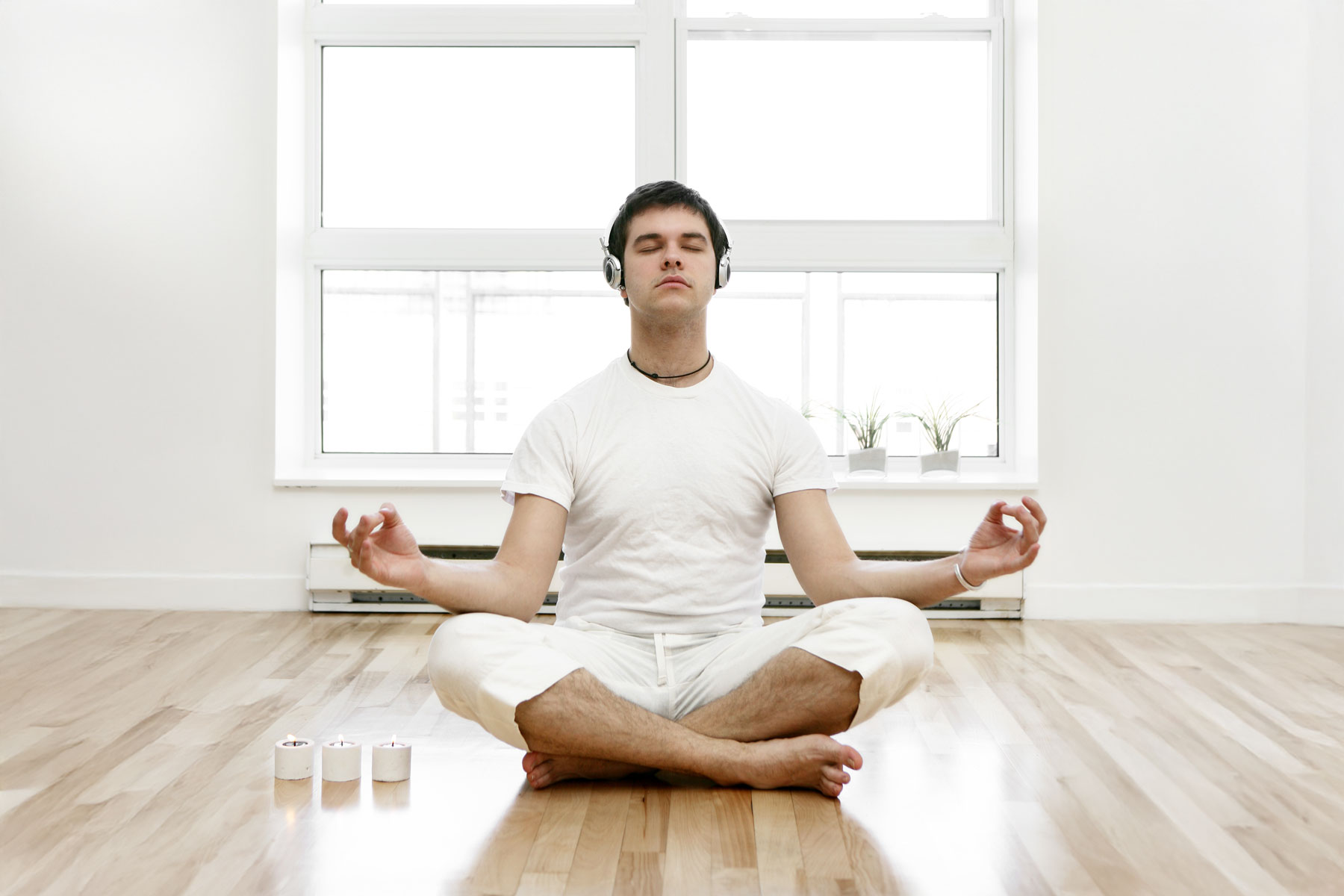
Balancing Between Presence and Preparation
Merriam-Webster’s dictionary defines equipoise as “a state of equilibrium.” It’s a simple definition, but it opens onto something much larger: how we live, how we hold ourselves in our environment, and how we make space for both presence and change.
Meditation and mindfulness practice are, at heart, about maintaining balance—an internal equilibrium between yourself and the world around you. Not a static balance, not some perfected stillness that you achieve once and keep forever, but a vibrant, living balance. It’s a responsive balance that shifts as life shifts.
Tibetan Buddhism offers a helpful way of thinking about this through the notion of the two truths. On one hand, we live in the conventional world: the everyday world of responsibilities, schedules, relationships, ambitions, bills, traffic, meals, and emails. This world appears stable, even predictable. It invites us to act as though things will continue as they are. On the other hand, there is the deeper truth of impermanence: everything changes, everything passes, everything is in motion. Equipoise lies in learning to hold both truths at once—accepting the ordinary world we inhabit without being fooled into believing it is fixed or here to stay.
That balance can be difficult to maintain. We are constantly pulled in two directions: toward immediate presence and toward future planning. Michael Carroll advises us to “balance the two efforts” between being fully in the moment and preparing for what comes next. That feels exactly right. We need both. We need the capacity to show up for the life that is here now, and we need the practical wisdom to shape the life that is still unfolding.
I often say: live like it’s your last day, and plan like you’re going to live forever.
There is tension in that sentence, but there is also truth. If we live only for the future, we postpone our lives and end up residing in dreamland. If we live only for the moment, we may neglect the structures that sustain us and those we care about. Equipoise is not choosing one over the other. It is learning to stand in the middle without losing your footing (though ironically, you may lose your ‘mind’).
That is why making time for yourself is not indulgent. It is necessary.
Be selfish, in the healthiest possible sense. Make abundant time for yourself. Protect a few minutes of silence. Sit down. Breathe. Do nothing productive. Do nothing impressive. Just fucking sit.
Even for five minutes.
Especially for five minutes.
We tend to imagine that transformation requires ideal conditions: a quiet room, a perfect cushion, an uninterrupted hour, a mind ready to cooperate. But the truth is far less glamorous and much more accessible. You can pause in the middle of a crowded day. You can take a breath before opening the next message, entering the next meeting, or moving on to the next obligation. You can return to yourself in small ways, over and over again.
Meditation is not about escaping the world. It is about meeting it more authentically. It is about recognizing that your worth is not reducible to your output, your usefulness, or your pace. It is about remembering that beneath all the striving, all the digital noise, and all the seemingly relentless momentum, there is still a self that needs room simply to be.
To be—not to optimize, not to improve, not to perform, not to produce.
Just to be in silence. Regularity is key. Make a commitment to yourself. Keep it modest. Just five minutes every day can make more of a difference than a sporadic hour here and there.
And maybe that is where equipoise begins: in the decision to stop fighting for a moment against the fact of your own existence. To stop constantly reaching forward or bracing against change. To sit inside your life as it is, without pretending it will last forever and without panicking because it won’t.
We live in a culture that praises acceleration and rewards depletion. We are taught to fill every gap, monetize every skill, answer every demand, and justify every moment. Under those conditions, stillness can feel almost rebellious. Choosing to sit quietly, with no agenda beyond awareness itself, becomes a refusal to be consumed entirely by the machinery of urgency.
And yet this kind of refusal is not withdrawal. It is recalibration. It is how we restore a sense of proportion. It is how we remember what matters. It is how we become more capable of loving, working, planning, and enduring without losing ourselves in the process.
Equipoise is not passivity. It is not detachment in the sense of indifference. It is a dynamic, compassionate steadiness—a willingness to remain grounded amid contradiction. To care deeply without clinging. To prepare responsibly without being possessed by anxiety. To accept impermanence without collapsing into despair.
That kind of steadiness does not come naturally to most of us. It has to be practiced. Often, the practice is disarmingly simple: sit down, be quiet, feel your breath, notice your thoughts, let them pass, and begin again.
This is not dramatic work. It will not always feel profound. Sometimes it will feel boring, restless, irritating, or futile. Do it anyway.
Because in those small acts of returning, something begins to change. You become a little less ruled by urgency, a little less seduced by the illusion of permanence, a little more able to inhabit the present without abandoning the future, and a little more balanced between effort and surrender.
That is equipoise.
A state of equilibrium, yes—but not the dead calm of something unmoving. Rather, the poised balance of a life lived consciously between the truths of this world: presence and preparation, form and flux, self and world, now and next.
So take the time.
Guard it fiercely.
Five minutes. Ten minutes. An hour if you can manage it.
Sit. Breathe. Meditate.
Let yourself be here.
The world will keep moving. You will too. But perhaps you can meet that movement with a little more grace, clarity, and balance.

The Tri-Fold Path is the guiding framework of The United Rite: a living spiritual way rooted in traditional witchcraft, ancient lore, and the realities of modern queer life. It is designed to support men who love men through a path that unites inner development, sacred relationship, and embodied practice. Rather than offering spirituality as an abstraction, it invites participants into a balanced, communal, and transformative way of living.
This path unfolds through three interwoven principles. Equipoise calls us into balance—between light and shadow, body and spirit, solitude and fellowship—so that our power arises from grounded presence rather than imbalance or reaction. Devotional service turns us outward in sacred reciprocity, teaching that care for community, ritual offering, and service to the Ancients are all expressions of spiritual maturity. Practice gives the path its form through disciplined ritual, study, and self-reflection, helping us embody our values in daily life.
Together, these three dimensions create more than a philosophy; they form a stable initiatory current. The Tri-Fold Path offers a way to reclaim enchantment, deepen queer spiritual identity, and participate in a tradition that is both ancestral and evolving. In the above, we looked at one of those pillars: the art of cultivating balance, presence, and attentiveness as the ground of magical and spiritual life.