
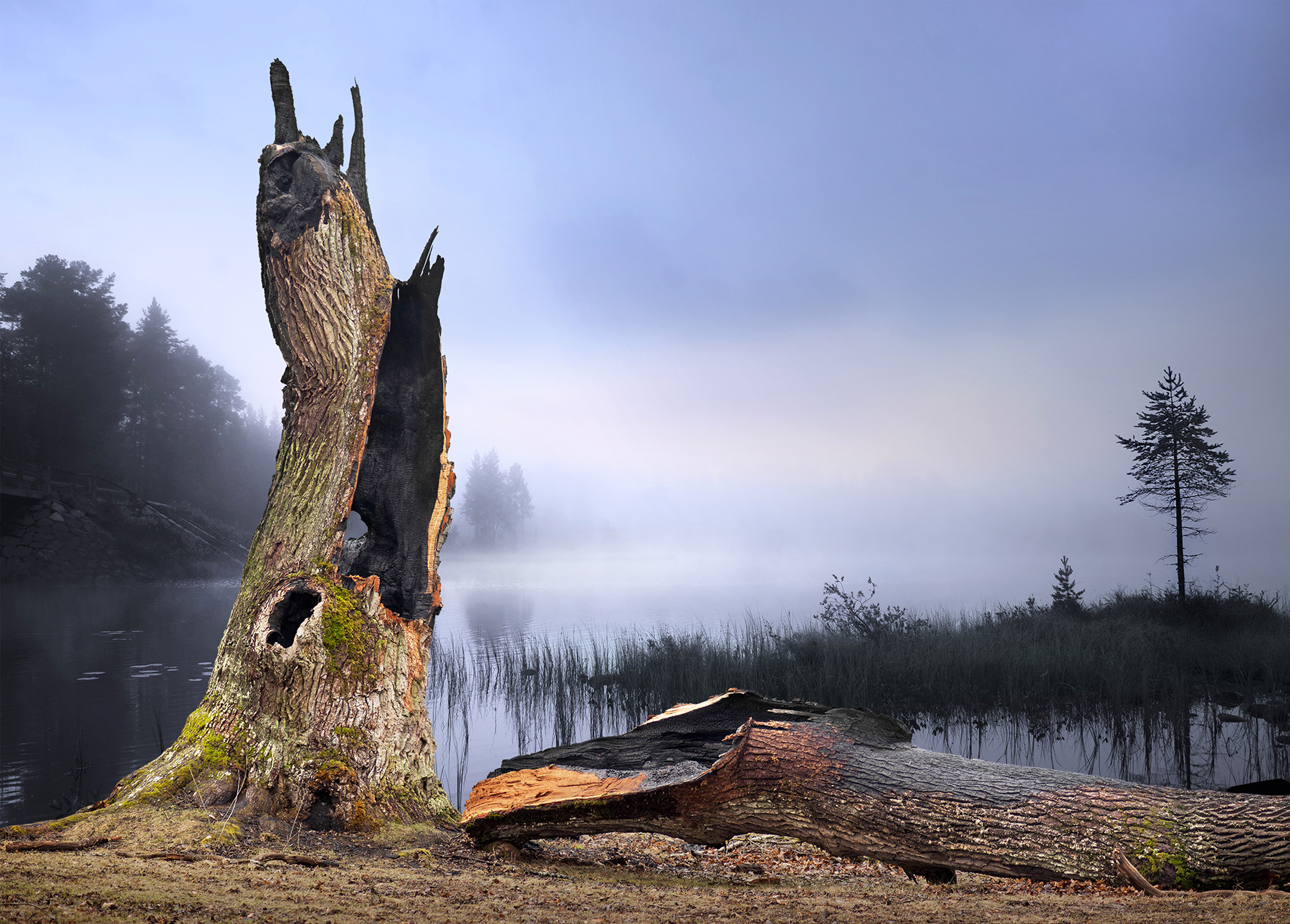
Tarot, Oak, and Sacred Transformation
In New Orleans, this is the season when the air grows heavier, the afternoons darken without much warning, and thunderstorms begin to roll in with greater regularity across the Crescent City. The sky becomes restless this time of year, charged with that familiar tension between beauty and violence that anyone who has lived here comes to know well. It feels fitting, then, to turn to the old image of the lightning-struck tree: a symbol not only of sudden disruption, but of power, transformation, and the sacred force that descends from above to change what stands rooted below.
The Tower, the sixteenth card of the Major Arcana, appears in the oldest surviving tarot decks. Yet in some early versions, it was not a tower at all. Several seventeenth-century French and Belgian decks depict a tall tree struck by lightning and label it La Foudre—“the Lightning.” The meaning remains much the same: sudden change through catastrophe, the kind that strips away what no longer serves us. Trauma breaks something open. Change may be unwelcome, but it is not always negative.
The lightning-struck tree is a powerful image. The tree symbolizes age, strength, health, and vitality. Lightning is the sudden, unpredictable force of nature and divine will. Zeus hurls the thunderbolt. Biblical tradition links lightning with God’s wrath. Thor rules thunder, lightning, and storms, and the oak is sacred to him. Together, they suggest a divine force striking the tree of life.
Lightning-struck trees also have a long association with witchcraft. Wood scorched by lightning is prized in magical work and understood to hold protective power. A wand made from such wood is potent. I keep one near me myself, gifted to me by a brother. It is no surprise that the Wildwood Tarot revives the image of the lightning-struck tree for its sixteenth Atu.
That image naturally leads to the oak, king of the forest and one of the most powerful sacred trees in the European religious imagination. Classical writers describe reverence for oak groves among the peoples of Gaul, and the oak remained sacred among the Anglo-Saxons as well. Their rune Ác means “oak,” and the rune poem describes it as a gift to humankind—useful for shelter, ships, fuel, and fodder, but also bound up with luck, warding, and endurance.
The sacred tree as pillar appears in the Irminsûl, the Old Saxon “great pillar,” a symbol of the world axis and a focus of open-air worship. Charlemagne is said to have destroyed one in his campaign to Christianize the Saxons. Whether it was wood or stone matters less than what it represented: the World Tree, Yggdrasil, the pillar between realms.
That symbolism reaches even further back. Seahenge, discovered on the Norfolk coast in 1998, dates to the early Bronze Age. Built from a ring of split oak trunks surrounding an inverted oak stump, it appears to have been a sacred enclosure centered on the tree. To me, its power lies in inversion. Oak is among the trees most often linked to the World Tree, with roots below and branches above. At Seahenge, that order is reversed. What lies beneath is turned upward. Enclosed within a ritual circle, the world becomes liminal.
For me, the oak is more than a symbol or a history. It is ritual reality. The upright oak is the World Tree, the axis mundi, and the sacred pillar. On my altar stands a stylized oak flanked by stags. My lightning-struck wand is always close at hand. My festival altars often include oak leaves, acorns, carved wood, and the god-pole in one form or another, depending on the season and the work.
Another treasured object on my altar is an offering vessel crafted from copper and holly, marked with Lichtenberg figures—lightning-like fractals burned into the wood by high-voltage electricity. Painted ravens, Huginn and Muninn, glide among the branches of that frozen storm.
It all returns to the same image: the sacred tree, the divine strike, and the transformation released when heaven touches wood.