
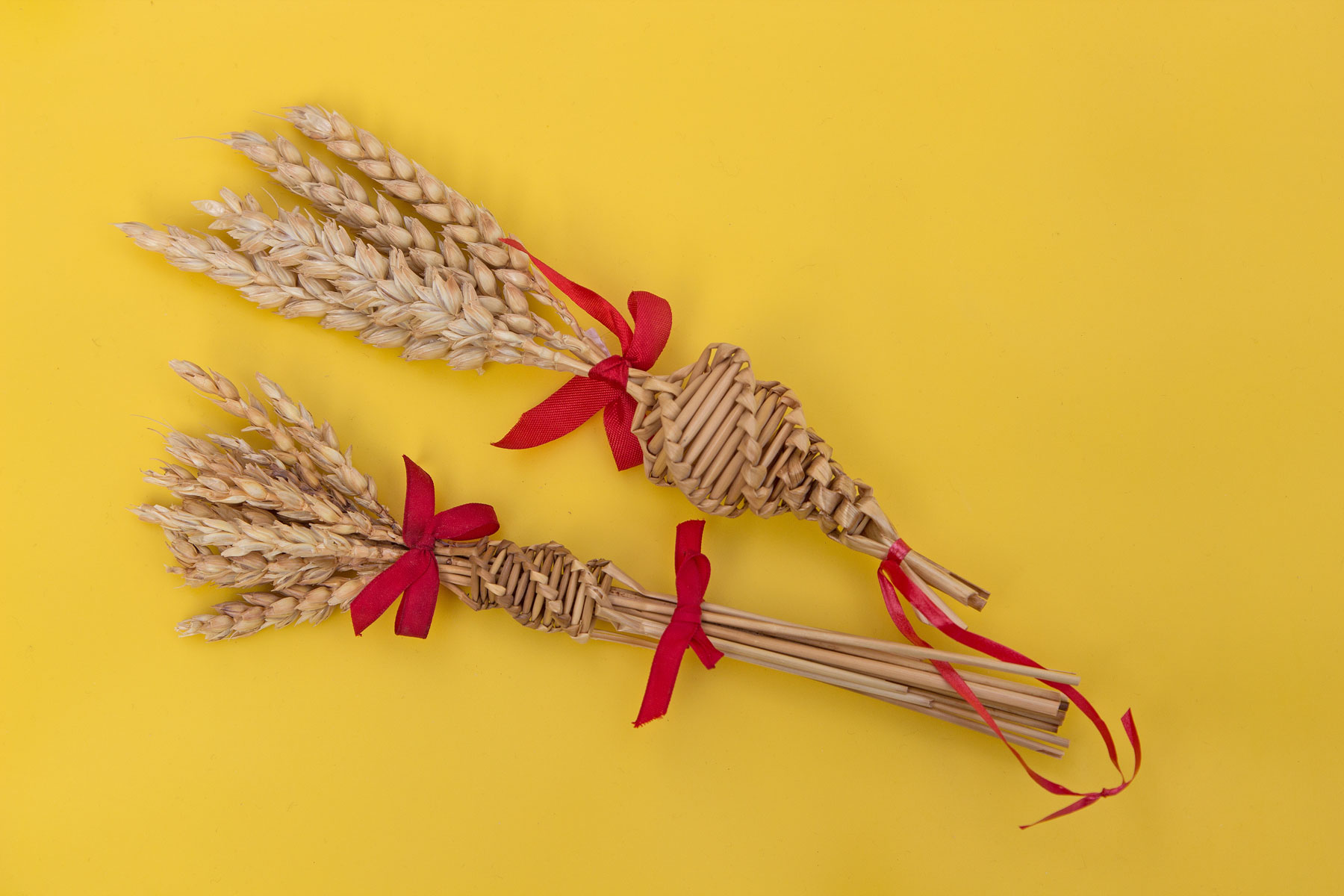
In the golden hush of harvest season, when the last sheaf of grain is cut and the fields fall silent, a curious figure emerges—delicate, intricate, and steeped in mystery. This is the corn dolly, a woven emblem of ancient agricultural rites and spiritual reverence that once held deep significance across the British Isles.
In the quiet turning of the Wheel of the Year, few symbols carry the sacred weight of the corn dolly. More than a rustic ornament, this woven figure is a vessel of spirit, a ritual object, and a whisper from the ancestors who lived in rhythm with the land.
🌿 Holding the Spirit of the Grain
In British folk tradition, it was believed that the spirit of the crop—sometimes called the Corn Mother, Harvest Maiden, or Old Woman of the Fields—dwelt within the grain. As the harvest neared completion, this spirit risked being scattered or lost. To honor and preserve her essence, the final sheaf was braided into a corn dolly: a temporary home for the spirit, carried with reverence into the hearth or altar space.
For spiritual practitioners, this act becomes a living ritual—a way to embody gratitude, continuity, and the sacred relationship between humanity and the land.
The corn dolly is not meant to last forever. Traditionally, it is kept through the dark months, often placed on an ancestral altar or hung in the home as a guardian of abundance. At Imbolc or Ostara, the dolly is returned to the earth—either burned and scattered, buried in the first furrow, or offered in ceremony. This release is a symbolic gesture of rebirth, ensuring the spirit’s return to the soil and the fertility of the coming year.
This cycle mirrors the spiritual path: the descent into shadow, the holding of wisdom, and the return to light.
🕯️ Crafting as Devotion
Making a corn dolly is an act of intentional creation. As you braid the straw:
- Speak prayers or affirmations for abundance, protection, or renewal.
- Weave in herbs, ribbons, or charms aligned with your intention.
- Dedicate the dolly to a deity, spirit guide, or ancestral force.
Each twist of straw is a link between the physical and the metaphysical.
Across Britain, different regions shaped their dollies in unique ways. In Yorkshire, the “Drop Dolly” takes the form of a teardrop; in Sussex, a horseshoe; in Cambridgeshire, a handbell; and in Scotland, the Claidheamh.
Though the forms vary, the essence remains: honoring the spirit of the land and the sacred cycle of sowing, reaping, and renewal.
In a world often disconnected from nature’s rhythms, corn dollies offer a way to re-root. The act of creating invites us to slow down, to honor the harvest—both literal and metaphorical—and to remember that spirit lives in all things.